
Whole-home backup
When WAPA drops, Powerwall picks the load up fast enough that most people only notice because the neighbours went dark. No generator to start, no fuel to keep on hand, no noise.

Solar340 installs Tesla Powerwall across the Virgin Islands. 13.5 kWh a unit, whole-home backup, and a battery that fills itself before a storm arrives.
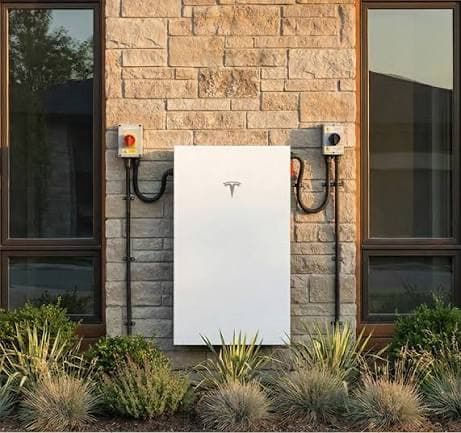
One unit on the wall, about the size of a door panel. The solar inverter is built into it, so panels wire straight in — fewer boxes on the wall, one app, and one company to call.
Why a battery here
This surprises almost everybody. A grid-tied solar system without a battery shuts itself off the moment WAPA goes down — it has to, so it cannot push power onto lines the crews are working on. Sun on your roof, nothing in your house.
A Powerwall is what closes that gap. It holds what your panels made during the day and runs the house on it at night or through an outage, and it switches over fast enough that most appliances never notice.
On these islands that is not a luxury feature. It is the whole reason most people call us.
Solar340 supplies and installs Tesla Powerwall across St. Thomas, St. John, St. Croix and Water Island — sized, wired and commissioned by our own crew.
Tesla Powerwall 3
Figures published by Tesla. We will size the system to your actual load, not to a brochure.
per Powerwall
48 A AC
runs well pumps and AC compressors
6 MPPTs, inverter built in
rated for direct sunlight
70% capacity retained
Powerwalls stack. You can run up to 4 Powerwalls + 3 Expansions on a single system — 94.5 kWh of storage and 44 kW of continuous power. Each Expansion unit adds another 13.5 kWh behind the main unit and shares its inverter, so adding storage later does not mean starting over.
94.5 kWh
What it does
When WAPA drops, Powerwall picks the load up fast enough that most people only notice because the neighbours went dark. No generator to start, no fuel to keep on hand, no noise.
Tesla watches the weather. When a storm is tracking toward the territory, your Powerwall charges itself to full automatically so you go into it with a complete battery.
The system decides when to pull from the battery and when to pull from the grid, so you use as little WAPA power as the setup allows.
The Tesla app shows what the panels are making, what the house is using and what is left in the battery, live. It is the part people end up checking every morning.
We wire it, commission it and show you how to read it before we leave.
Ask about Powerwall→
Better together
Powerwall 3 has the solar inverter built into it — 6 MPPTs and up to 20 kW of panels straight into the unit. That means fewer boxes on the wall, one system to monitor, and one company to call when something needs looking at.

Powerwall is not the only way to do this. We also stock the SRNE line — hybrid and off-grid inverters, lithium batteries and commercial storage — usually for less per kWh.

Free, no obligation
Tell us what you pay WAPA every month. We will tell you what solar would cost you instead — in writing, with no pressure attached.